CIRCLE POWER: When Leadership Becomes an Act of Love
A Story of Power, Collapse, and What It Actually Takes to Lead
The Search
For thousands of years, her spirit wandered the galaxies searching for the origin of a sound. She knew that wherever that sound came from, that was where she came from.
Twenty-seven years ago, she landed in the Land of the Rising Sun and realized: she was that spirit. The sound was Taiko, the Japanese drumbeat that moves through bone, body, and earth.
The Dream That Changed Everything: Amanojaku
Eight years after landing in Japan, I was performing with Waraku Daiko, an international taiko team. But beneath the surface, I held a quieter, more private longing — a five-year dream that took root the first time I heard them play.
I dreamed of joining Amanojaku.
In Japanese folklore, Amanojaku is the name of a small demon or yokai known for being mischievous — doing things backwards or opposite to expectations. In English, it translates to “a contrarian spirit”: the one who pulls you toward the edge you avoid, the force that challenges your certainty and humbles your ego. Amanojaku was not just a taiko ensemble. They were initiation. The group featured three Japanese females who awed me the first time I saw them play. The dream was born.
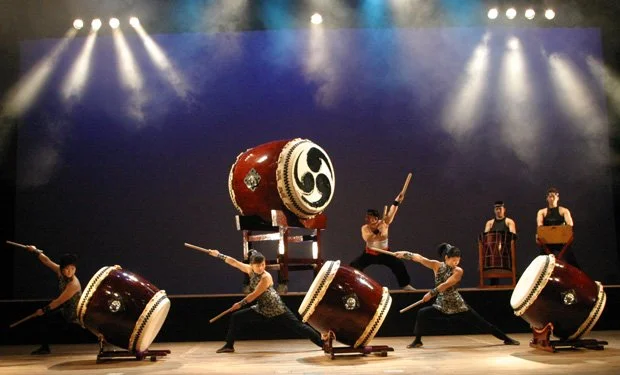
http://english.amanojaku.info/profile/index.html#globalnavi
Amanojaku embodied a way of being I longed for: disciplined enough to be free, humble enough to be powerful, collective enough to transcend the self. Their music demanded presence, attunement and a willingness to dissolve the “I” into the “we” without erasing oneself.
And then, what seemed impossible, happened: after initially being rejected but returning with a “why” and not giving up, I was invited to join them.
The dream I had carried for five years became real, and my life’s trajectory rerouted.
From day one, Amanojaku broke me open. They held me to a standard rooted not only in technical perfection but in relational power, humility, and embodied truth. They reshaped my leadership, my understanding of power, and my capacity to stay present in hard moments. They prepared me for what came next: for the four-day intensive, the hand sequence, the collapse, and the forty-five minutes of staying that would change everything.
Formation: What I Brought Into That Room
By the time I walked into that dojo (practice room), I had spent eight years in the Canadian wilderness learning what teenagers nobody believed in could do when the mountain didn’t care about their story. As founding director of New Directions and through forty years with Outward Bound in Canada, Japan, and at the international level, I had learned that the edge isn’t where comfort ends. It’s where groups discover what they’re actually made of.
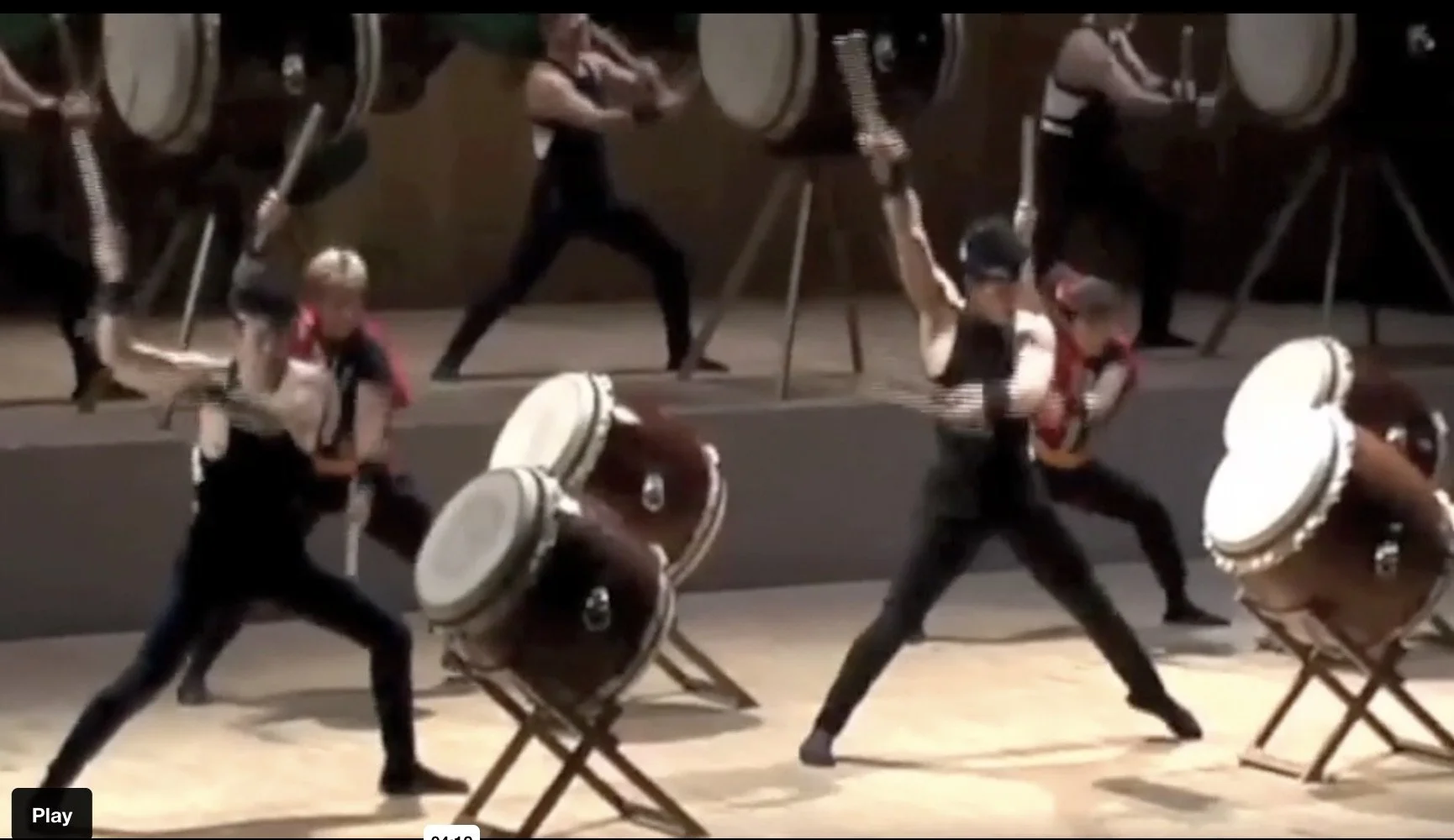
Thirteen years of taiko had driven that lesson into my bones. Literally. In taiko, there is no sheet music. Complex rhythms are learned through the body, transmitted person to person, held in muscle memory and collective attunement. You cannot fake your way through it. If your body isn’t in the rhythm, eighteen people feel it instantly.
Two graduate programs in Process Work, the methodology Arnold Mindell founded for tracking what is actually unfolding beneath the surface of any human system, gave me language for everything the wilderness and the drum had been teaching me separately.
Mindell was one of the most profound teachers of my life. His work lives inside every facilitation I design, every coaching conversation I hold, every moment I help a leader stay with something uncomfortable long enough for it to transform rather than explode.
I thought I was prepared for what came next.
Solos and Spirit
Before the final challenge, our four-day intensive workshop in Fukui Prefecture in Western Japan began with something paradoxical in a collectivist cultural frame: individual solos on a 1,300-year-old drum carved from a single Carak tree from Cameroon, Africa — the largest taiko drum in the world.
My two-minute solo became one of the most spiritual experiences of my life. Out of body and fully embodied at once. I felt my entire spirit enter the spirit of that ancient drum. My sensei (teacher) cried and said he understood that although my Japanese language was poor, my spirit was both Japanese and African.
Watching each other’s solos deepened our cohesion. Individual creative expression strengthened our collective body. We were ready for what came next. Or so I thought.
THE CHALLENGE — Where Everything Broke Open
At the close of the fourth day, Watanabe-sensei gathered us and issued the final challenge. To earn the right for our small team to play on the six great drums in front of us, we had to perform an intricate hand sequence, balanced on our heels, in perfect unison.
He demonstrated once. Seventeen executed it instantly.
And in that single moment, time shattered.
My vision narrowed. My stomach dropped. My hands rose… and froze. Locked. Utterly unwilling to move.
Around me, perfect claps filled the dojo. My breath shot high into my chest. Heat crept up my neck. Then the old internal avalanche hit:
You’re going to ruin this for everyone. They’ll resent you. You’ll be kicked out. You’re the weak link. Not again.
The insider–outsider wound detonated. Every childhood moment of exclusion, scapegoating, humiliation. All of it returned, somatic and immediate.
My shoulders curled in. My heels wanted to collapse. My body braced for rejection. Then everything went quiet.
Watanabe-sensei slowly turned toward me. He didn’t scold. He didn’t rescue me. He simply sat. Solid. Grounded. An elder holding the flames.
My team gathered around me in a circle, lowering their bodies to meet mine.
“You can do this,” someone whispered.
“I CAN’T,” I cried. “I CAN’T DO THIS. I’LL NEVER BE ABLE TO.” They didn’t argue. They didn’t withdraw. They didn’t look away.
They stayed.
We began again. Painfully slow. My fingers trembled and stuttered. Someone mirrored my exact broken motion. Another adjusted their breath to mine. The group attuned to the slowest point in the system. Me.
Minute after minute. Thirty minutes. Forty-five.
The longest forty-five minutes of my life.
Then, something shifted. My hands moved. Not gracefully. But they moved. “Stand up,” someone said.
“They stayed. This is the hardest thing a group can do. And the most powerful.”
THE MOMENT AFTER — The Phoenix Rising
We rose together. I attempted the full movement: hands, heels, rhythm, and broke again. “It’s okay,” someone said. “We’ll go slower.”
And then it happened. The rhythm landed.
Stillness arrived. The kind that steadies your insides.
My breath dropped from my throat into my belly. My shoulders softened. The shaking in my hands stopped. And deep inside, a question I had carried my whole life surfaced:
Am I still in?
My knees trembled. Not from fear now, but from release.
Then warmth rose through my spine and lit softly behind my sternum. A candle. Small. Steady.
This was not relief. This was being held.
Held by a circle that refused to abandon me. Held by people who didn’t interpret my fallibility as failure. Held by a system that stayed steady when I shook.
A shell inside me cracked open. Within it, a phoenix, dusty, cramped, exhausted from years of bracing for rejection, lifted its head.
My body sent a dozen small signals: warmth pooling in my belly, breath widening, throat loosening, hands steadying, a soft hum of aliveness under my skin.
These were not thoughts. They were somatic assurances: You belong. You are not disposable. The circle holds.
That moment didn’t teach me a movement. It taught me how humans rise. It taught me that teamwork is the alignment of hearts, not skills; power is the choice to stay; conflict is a doorway, not a rupture; purpose emerges through connection, not pressure; and leadership is, at its core, an act of love.
Something old died: the part perpetually bracing for exile. Something truer rose: a presence capable of holding others the way I had been held.
My Whole Team Got to Play
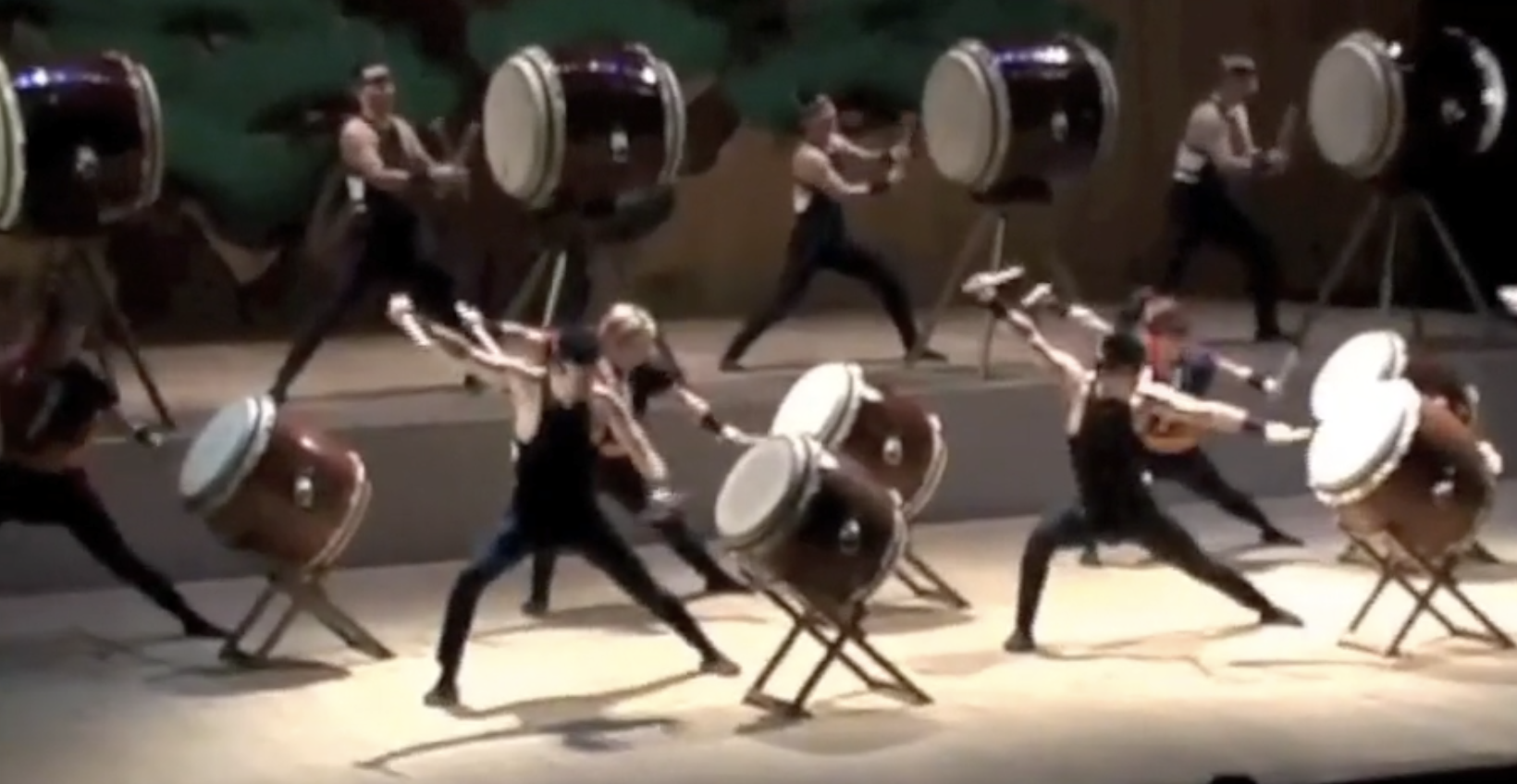
When the rhythm finally held, balanced on our heels, hands moving as one, I knew: my whole team was going to get to play. Not in spite of my collapse. But because of how we moved through it together.
What the Circle Knew
My team didn’t save me that day. They did something harder.
They refused to make my struggle someone else’s problem to solve. They didn’t offer advice, or pep talks, or the kind of encouragement that’s really just impatience wearing a smile. They lowered their bodies. They matched my broken rhythm. They attuned to the slowest point in the system and stayed there until something shifted.
This is not what most teams do.
Most teams, in boardrooms, in organizations of every size, do one of two things when someone breaks down. They rescue or they abandon.
Rescue looks generous but actually communicates: you can’t handle this, so I’ll handle it for you. Abandonment looks like professionalism but actually communicates: your struggle is inconvenient, and we need to move on.
Rescue and abandonment. Two sides of the same failure of power.
What that circle did was neither. They held. And holding is the hardest thing a group can do, because it requires every person in that circle to tolerate their own discomfort, their impatience, their anxiety, their fear that they’ll be next, without acting on it.
That is power at its highest expression. Not to fix. Not to flee. To stay present with what is, until what wants to emerge has room to arrive.
“Rescue and abandonment are two sides of the same failure of power.
Holding is what great teams actually do.”
The Gap No One Talks About
Here is the undiscussable at the center of most leadership development: it doesn’t actually change how leaders use power in the moments that matter.
It changes what they know. It gives them vocabulary, models, assessments, feedback tools. All useful. All insufficient.
Because most leadership development lives from the neck up. It operates as if leaders are brains on sticks. As if the body is just the vehicle that carries the mind to the meeting.
But the body is where power lives. It’s where triggers fire. Where courage gathers or collapses. Where trust is felt before it’s spoken. Where the micro-signals of a room: who’s leaning in, who’s holding their breath, whose jaw just tightened, tell you what’s actually happening beneath the polished surface.
When the moment comes, and for every leader, it comes, when someone on your team is falling apart in the middle of a critical meeting, when the conflict you’ve been avoiding erupts, when your own composure cracks and you feel the old avalanche bearing down, you don’t reach for a model. You reach for whatever your body knows.
The gap is embodied capacity. The ability to stay present, in your body, in real time, when everything in you wants to react.
What It Sounds Like in the Room
I’ve watched it happen in boardrooms. A CFO delivers difficult news and the CEO’s jaw tightens. A VP’s voice flattens. Two people stop making eye contact. The room contracts.
The leader who hasn’t done this work either overcorrects, jumping in to fix, smooth, or redirect before anyone has to sit with discomfort. Or withdraws, letting the silence harden into something nobody will name. Both moves are rescues dressed up as leadership. Both evacuate the moment just before something real could emerge.
The leader who has done this work does something different. Their body stays grounded when the room charges. They might say, simply: “Let’s stay with this. Something important is trying to surface.” And then they wait. Not because they have the answer. Because they’ve learned to trust what emerges when a room is held rather than managed.
The quality of decisions changes. People stop performing and start telling the truth. Conflict becomes information instead of threat. And leaders discover something they rarely get to experience: their power becomes more, not less, when they stop using it to control and start using it to hold.
“Their power becomes more, not less, when they stop using it to control and start using it to hold.”
What I Am Building
I’ve spent thirty years building containers where this can happen. Where teams learn to hold their members the way that circle held me.
Where conflict arrives not as a case study but as the live, charged, somatic reality of being in a room with people who hold different truths. Where leaders learn to read the room by first learning to read themselves. The micro-signals, the body’s early warning system, the power patterns that shape every interaction before a word is spoken.
This is the hardest work most leaders will ever do. Because it asks them to stop performing strength and start practicing presence. To discover that their power becomes more precise, more trustworthy, and more formidable when they stop wielding it reactively and start holding it with awareness.
When that happens, innovation increases because psychological safety isn’t a poster on the wall but a lived experience in the room. Conflict becomes the laboratory where strategy gets sharper. And leaders discover that the quality of their presence, not the size of their authority, is what earns real followership.
The Sound That Calls You Forward
I began this story with a spirit wandering the galaxies, searching for the origin of a sound.
I know now that the sound wasn’t just taiko. It was the sound of collective power. The deep resonance that happens when human beings choose to stay with each other through the hardest moments instead of turning away.
That sound is in the room, when a team slows down for the one who is struggling. It’s in the wilderness, when a group of teenagers nobody believed in carries each other up a mountain. It’s in the boardroom when a leader stops pretending they have the answer and says: “I don’t know, but I trust us to figure this out together.”
Something old died on that dojo floor: the part perpetually bracing for exile. Something truer rose: a presence capable of holding others the way I had been held.
That is the power that lives at the core of every team, every organization, every human system that has the courage to stop leaving people behind.
And it is, at its core, an act of love.
Leadership as an act of love asks one question above all others:
When it is hardest to stay, do you?
About the photos in this article:
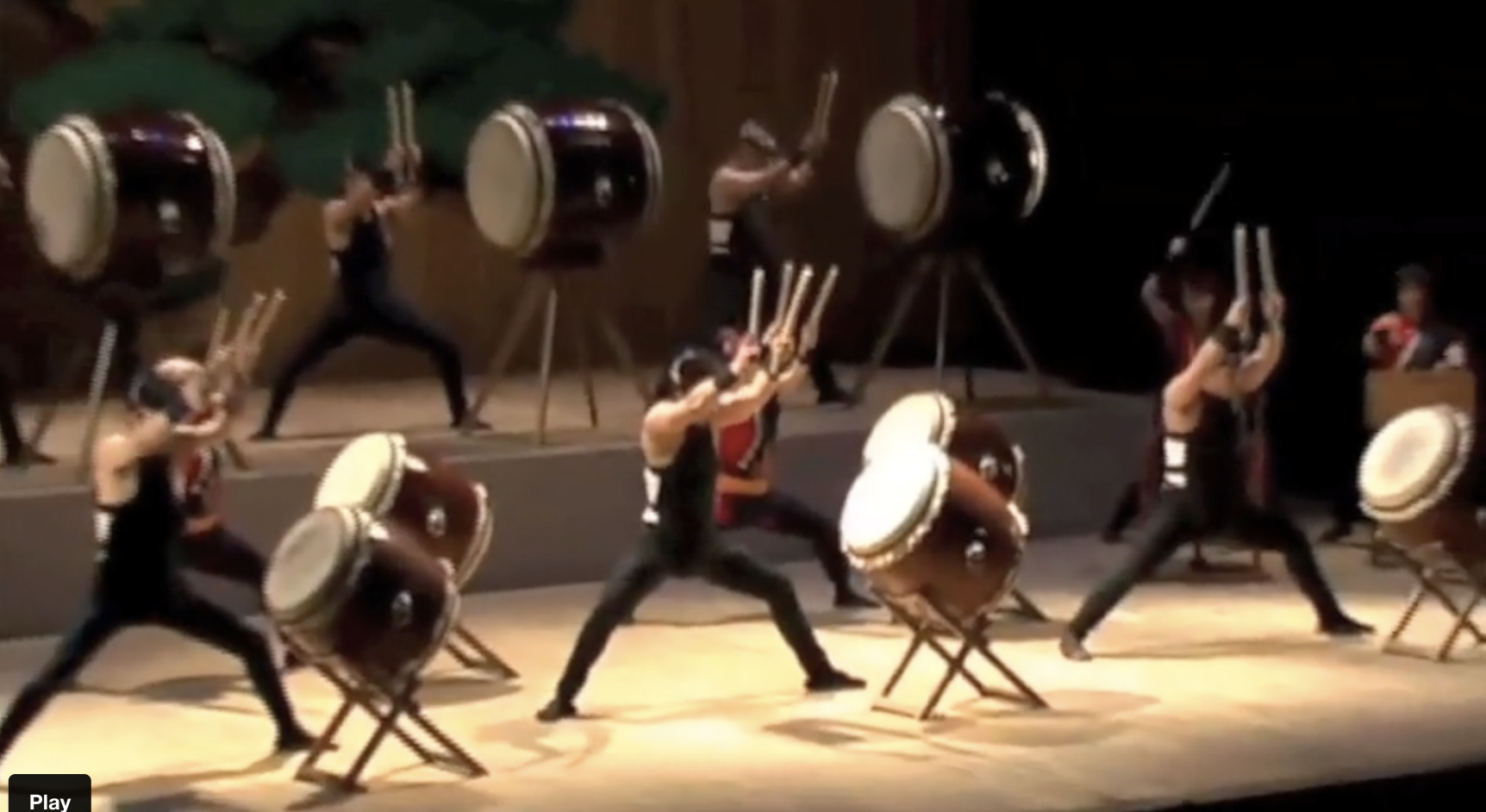
The first photo is of Taiko Shudan Amanojaku, the professional ensemble, and links to their website.
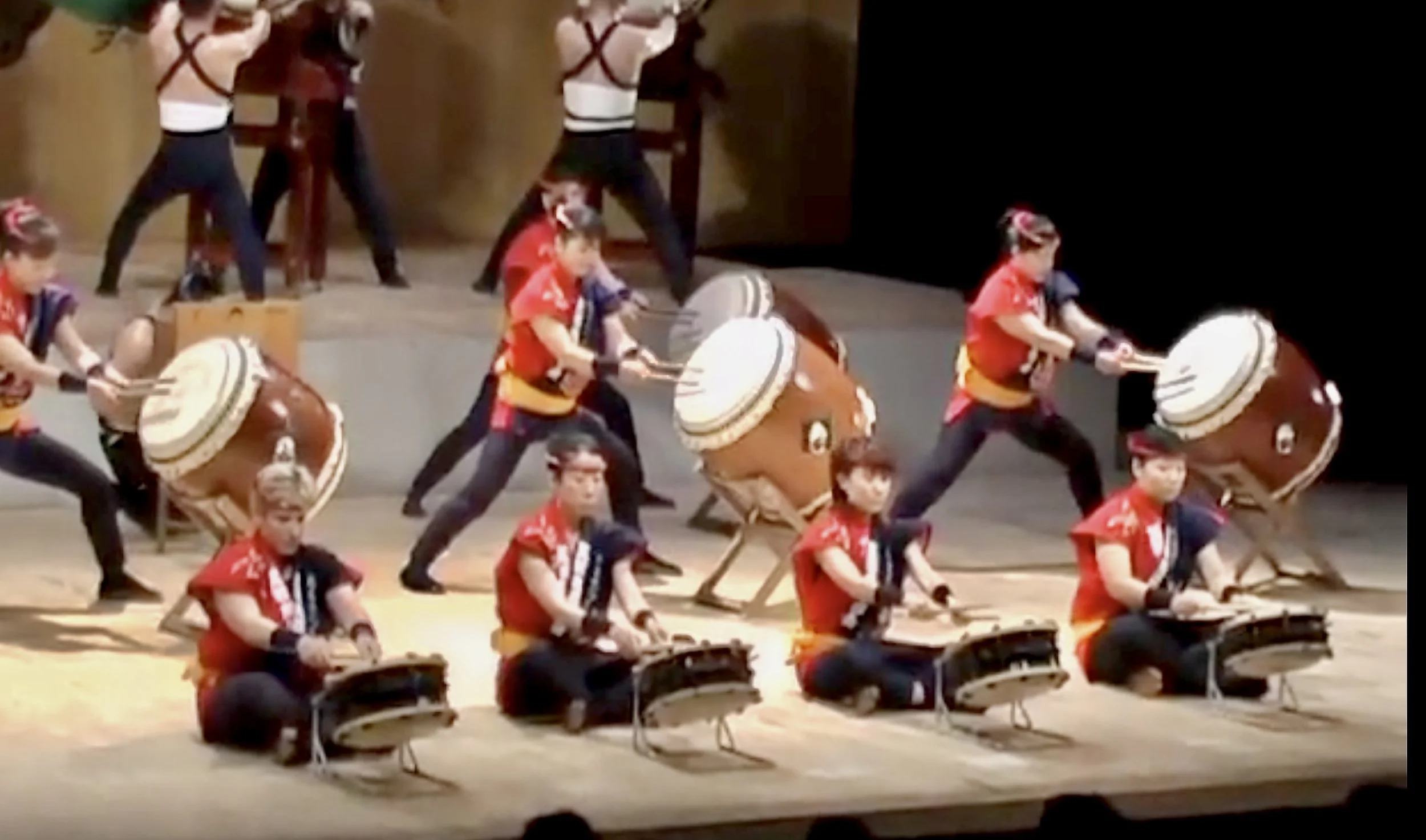
The four photos that follow are from Amanojaku Hozonkai's 10th anniversary performance. Founded in 1993, they are the primary student ensemble of Taiko Shudan Amanojaku. This is the five-year dream, made real.
Videos:
The following are two videos from Amanojaku’s 10th year Anniversary Tensho No Kai Performance. Go on a full sensing journey with the ensemble that shaped everything.
DOTO: https://vimeo.com/1051434020?fl=pl&fe=sh (12 min)
YATAI BAYASHI https://vimeo.com/1051423377 (forward to 1:43:18) This piece has a shimedaiko (small drum) quad solo that was the hardest piece I ever mastered.